MERCURY SPECIATION
It now well documented that organomercury compounds such as methyl mercury chloride and ethyl mercury chloride are much more toxic than inorganic mercury . It is therefore important to be able to separate and measure these and other species of mercury in order to avoid a tragedy similar to that at Minamata Bay. In order to determine levels of the individual mercury species, separation techniques such as such as HPLC (usually partition or ion chromatography) and/or GC are widely used. Using suitable extraction procedures, these techniques combined with sensitive detectors such as an Atomic Fluorescence spectrometer, offer the analyst a reliable and inexpensive system for mercury speciation. For the HPLC speciation of mercury, a column suitable for the separation of the organo-mercury species is connected to an HPLC pump fitted with solvent handing accessory and manual injection valve. The column outlet is connected to the PSA 10.025 Millennium Merlin where the separated mercury species are oxidised to Mercury2+. Stannous chloride is added in the gas liquid separator where mercury0 vapour is released which is measured, using Atomic fluorescence spectrometry operating in continuous flow mode. Automated mercury speciation can be achieved simply by the addition of an autosampler and automated valve. As well as it's own 10.820 Modular Interface, P S Analytical offer both Agilent and Dionex LC options for the separation of mercury species using a PSA Millennium Merlin as the detector. PSA 10.820 MODULAR INTERFACE COUPLED WITH THE 10.025 MILLENNIUM MERLIN FOR THE SPECIATION OF MERCURY |
||
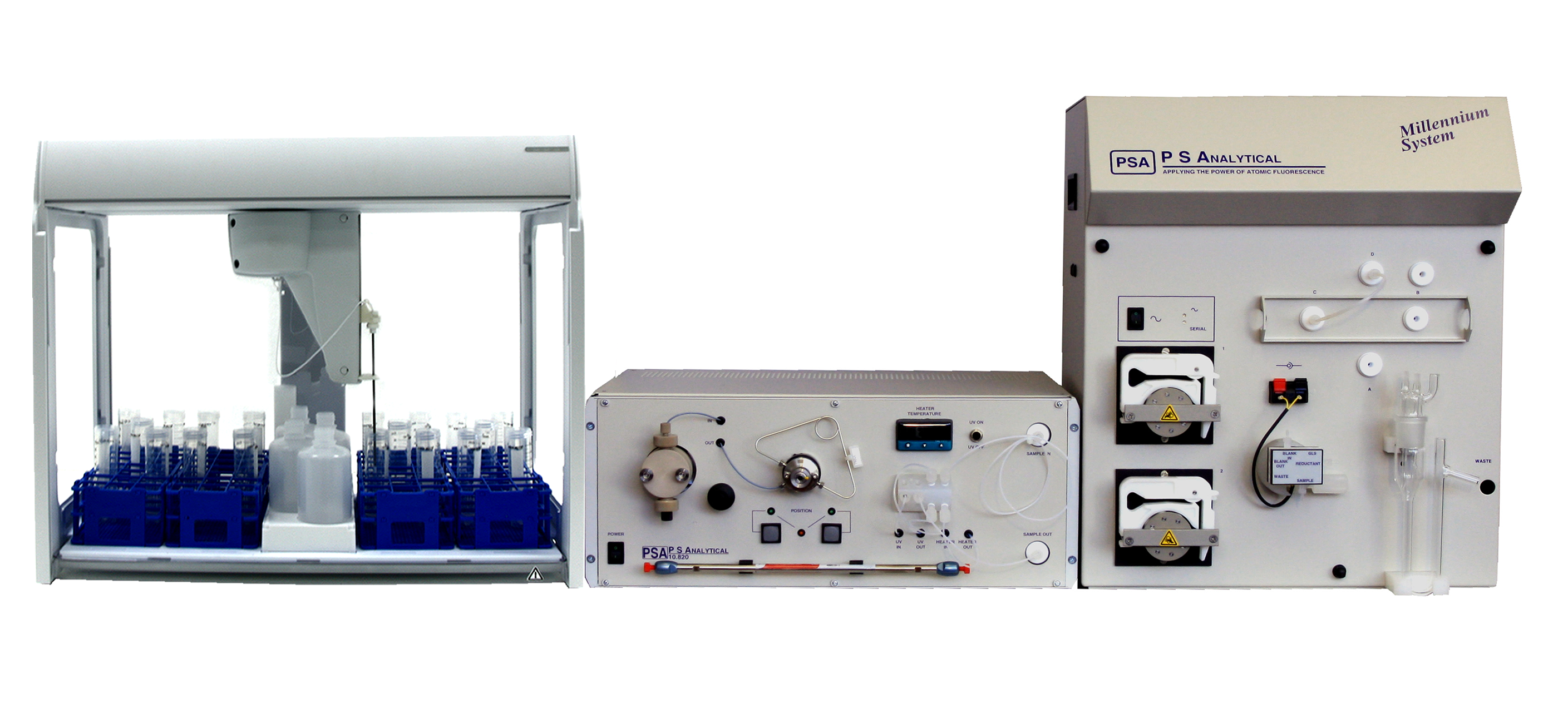 |
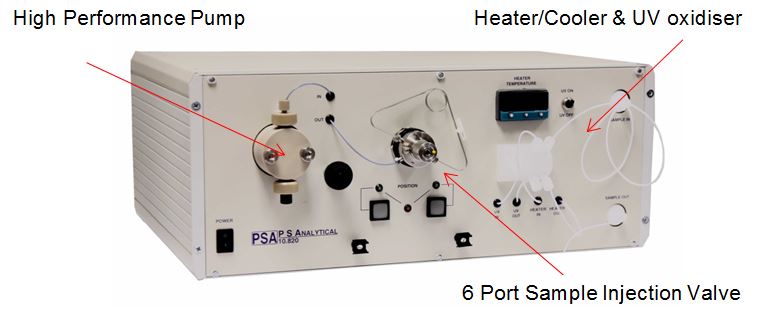
The MI extends the capability of P S Analytical's Millennium Merlin and Excalibur Atomic Fluorescence Spectrometers and is available in a number of configurations. The MI 10.820-1000 includes:
|
|
With a simple interface, and compatible flow rates, the accessory facilitates speciation studies (Hg, As, Se, Sb, Bi etc), online digestion (heat and UV), as well as a variety of post column reactions. The conjunction of the AFS systems with the MI provides ultimate detection performance for both sensitivity and selectivity. In addition to the impressive detection performance, the automated approach significantly speeds up analysis times, reduces and sample pre-treatment and handling errors. |
 |
|
All of these systems provide arsenic speciation for labs that need an easy-to-learn and easy-to-use system, which can be automated and/or extended as the labs needs grow. |
||
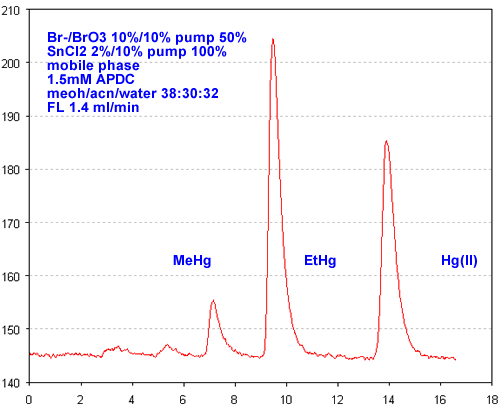
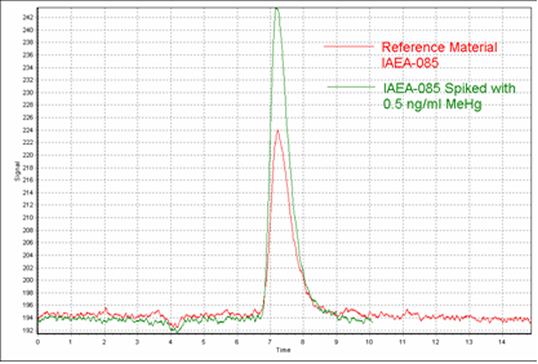
Typical Results achieved for Reference Materials
|
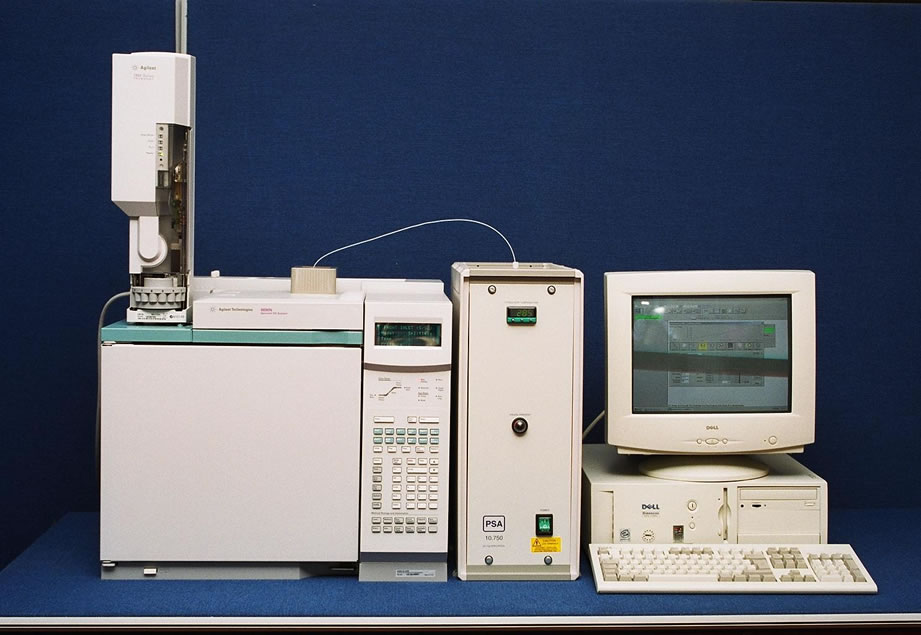 |
The system comprises an atomic fluorescence spectrometer with integrated pyrolysis control unit coupled to gas chromatographic column output for the determination of mercury at ultra trace levels. The detector uses a low pressure Hg lamp as the excitation source and detection by Photo-multiplier. The system is suitable for both routine and research applications. The instrument can be used for a range of applications and typical results have shown excellent agreement with certified reference materials. Both HPLC and GC approaches offer different advantages, please contact your local distributor or PSA directly to see which approach would best suit your particular application. |
||||||
Typical Results achieved for Reference Materials
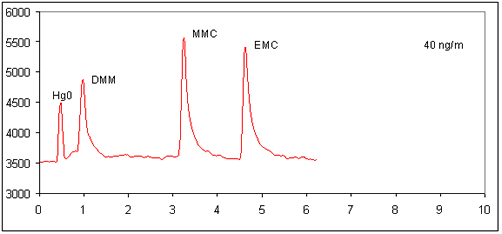
Typical Chromatogram obtained on the 10.725 GC-AFS System
|
|||||||
|
|
 |